Binance Red Packet Code
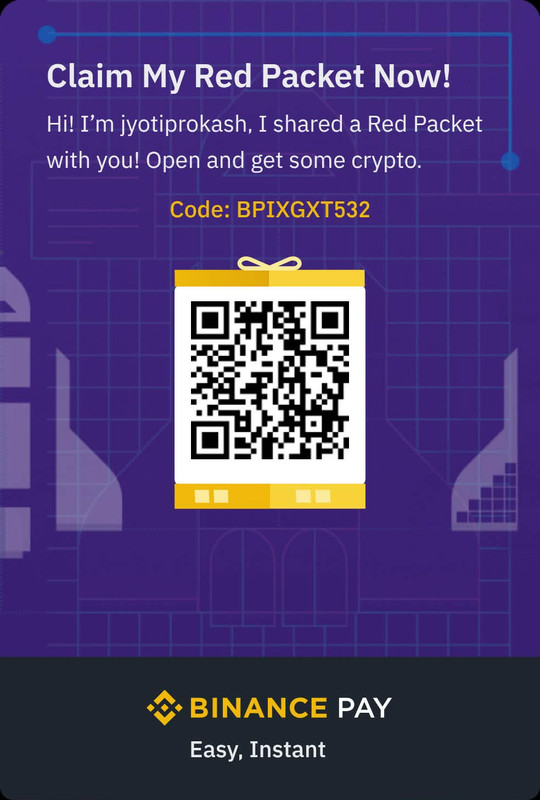
go to the Binance app and search red packet and use code get crypto rewards.
Binance Red Packet Code
Computer Science and Engineering (CSE) is the foundation of modern technology. Whether you want to become a software developer, data scientist, network engineer, or cybersecurity expert, understanding CSE fundamentals is essential. This article covers 20 important beginner-level questions and answers to help you build strong core knowledge.
Computer Science is the study of computers, algorithms, programming, data, and computational systems. It focuses on how software and hardware work together to solve problems efficiently.
Hardware refers to the physical parts of a computer such as CPU, keyboard, mouse, monitor, RAM, hard disk, and motherboard.
Software is a set of instructions that tells the computer what to do. Examples include operating systems, web browsers, and mobile apps.
An operating system (OS) manages computer hardware and software resources. It allows users to run applications and interact with the system. Examples: Windows, Linux, macOS.
An algorithm is a step-by-step procedure used to solve a problem logically and efficiently.
A programming language is used to write instructions for computers. Examples include C, Java, Python, JavaScript.
A compiler converts high-level programming code into machine-readable code.
An interpreter executes code line by line instead of converting the whole program at once.
A data structure is a way of organizing and storing data efficiently. Examples: Array, Stack, Queue, Linked List.
A database is a structured collection of data stored electronically for easy access and management.
RAM (Random Access Memory) temporarily stores data and programs currently being used by the computer.
ROM (Read Only Memory) stores permanent instructions required to boot the computer.
A network connects multiple computers to share data and resources.
The internet is a global network connecting millions of devices worldwide.
An IP address is a unique identifier assigned to each device connected to a network.
Cybersecurity protects systems, networks, and data from digital attacks.
Cloud computing provides computing services over the internet instead of local storage.
AI allows machines to simulate human intelligence and decision-making.
Machine Learning enables systems to learn from data without being explicitly programmed.
SDLC is the process of planning, designing, developing, testing, and maintaining software.

How to Become a Full-Stack Developer in 2026: A Step-by-Step Roadmap
Published by: Dev-Tech Lab Team
Category: Web Development / Career Guide
Reading Time: 8 Minutes
The tech landscape is shifting. With the rise of AI-driven coding assistants and specialized cloud architectures, being "just a frontend" or "just a backend" developer is no longer enough. Companies are looking for Full-Stack Developers—professionals who understand the entire ecosystem of an application.
In this guide, we will break down the exact path you need to follow to master full-stack development this year.
Before jumping into frameworks, you must have a rock-solid foundation. Everything on the web still runs on these three:
HTML5: Focus on semantic tags and accessibility.
CSS3: Don't just learn colors; master Flexbox, CSS Grid, and Responsive Design.
JavaScript (ES6+): This is the heart of modern development. Understand Closures, Promises, Async/Await, and DOM manipulation.
Once you know JavaScript, pick one framework and stick to it until you are proficient.
React.js: (Recommended) Still the king of the market. Learn Hooks, Context API, and Next.js for Server Side Rendering (SSR).
Vue.js: Great for beginners due to its simplicity.
Tailwind CSS: A must-learn utility-first CSS framework to speed up your styling workflow.
The backend is where the logic and data live. For a Full-Stack role, you should focus on:
Node.js & Express: Perfect for JavaScript lovers as it allows you to use one language for both sides.
Python (Django/FastAPI): Excellent for AI integration and data-heavy apps.
Authentication: Learn how to implement JWT (JSON Web Tokens) and OAuth (Google/GitHub login).
Data is the soul of any application. You need to know at least one of each:
Relational (SQL): PostgreSQL or MySQL (Best for structured data).
NoSQL: MongoDB (Best for flexible, document-based data).
ORM/ODM: Learn Prisma or Mongoose to interact with databases easily using code.
A developer who can’t deploy their code is only half-ready.
Version Control: Git & GitHub are non-negotiable.
Cloud Hosting: Learn how to deploy on Vercel, Netlify, or AWS.
Docker: (Intermediate) Understand containerization to make your apps run anywhere.
How the MERN Stack Is Evolving — and What’s Replacing It
In the last decade, the MERN stack (MongoDB, Express, React, Node.js) became the default choice for JavaScript-driven web applications. Startups scaled on it, enterprises adopted it, and bootcamps built entire curricula around it.
But 2026 is not 2018.
Modern full-stack development is facing new pressures:
performance ceilings, global edge deployments, AI-native features, real-time expectations, and rising infrastructure costs. MERN is no longer “wrong,” but it is no longer sufficient on its own.
This guide is a technical survival manual for full-stack developers navigating 2026 — explaining why MERN is evolving, what’s replacing parts of it, and how to future-proof your skill set.
MERN succeeded because it offered:
A single language (JavaScript) across the stack
Rapid development
A massive ecosystem
Easy hiring
However, the web has changed dramatically.
Traditional Node.js servers struggle with:
Cold starts
High-concurrency CPU-bound workloads
Edge computing requirements
Modern apps expect sub-100ms latency worldwide, which centralized Node servers cannot consistently deliver.
React is still dominant, but:
Client-side hydration costs are high
Bundle sizes have grown
Overuse of state management libraries increases cognitive load
The industry is shifting away from pure SPA architectures.
MongoDB remains useful, but:
Data consistency matters more now
Analytics and relational queries are common
AI systems require structured, relational data
Teams increasingly prefer PostgreSQL with JSON support over pure NoSQL.
Express is:
Unopinionated to a fault
Lacking native TypeScript safety
Missing modern middleware patterns
New frameworks offer better defaults, performance, and security.
Important truth:
MERN isn’t disappearing — it’s being modularized and replaced piece by piece.
Node, React, and JavaScript remain essential — but the way they are used has fundamentally changed.
Instead of a single “stack,” developers now assemble performance-first ecosystems.
Server-first rendering
Edge-native execution
Type safety everywhere
SQL-first data models
AI-ready architectures
Let’s break it down.
React in 2026 is no longer:
Client-only
SPA-centric
Instead, it is:
Server-rendered
Streaming-enabled
Suspense-driven
Now the default React platform:
React Server Components
Partial hydration
Streaming HTML
Built-in edge support
For content-heavy and performance-critical sites:
Zero-JS by default
Component islands
Framework-agnostic
Rising adoption due to:
Minimal runtime
Compile-time optimization
Superior performance for dashboards and tools
Survival Tip: Learn React Server Components, not just React hooks.
Node remains critical — but Express is no longer the default choice.
Faster than Express
Built-in schema validation
TypeScript-first
Better plugin system
Enterprise-grade architecture
Dependency injection
Modular design
Excellent for large teams
Cloudflare Workers
Deno Deploy
Vercel Edge Functions
These eliminate traditional servers entirely.
MongoDB is no longer the default for serious applications.
ACID compliance
JSON + relational hybrid
Better analytics
AI-friendly schema design
Works with GraphQL and REST equally well
PostgreSQL
Prisma or Drizzle ORM
Supabase / Neon / PlanetScale
Redis for caching and real-time
Rule of 2026:
Use SQL first, NoSQL only when necessary.
The MERN successor isn’t one stack — it’s a pattern.
Next.js
TypeScript
tRPC
Prisma
PostgreSQL
Benefits:
End-to-end type safety
No REST boilerplate
Faster development
Fewer runtime bugs
MERN was built for CRUD apps.
2026 apps are:
AI-assisted
Event-driven
Real-time
Context-aware
Vector databases (pgvector, Pinecone)
Streaming APIs
Background workers
Observability tooling
Node alone is no longer enough — architecture matters more than language.
In 2026, full-stack developers must understand:
CI/CD pipelines
Edge deployments
Observability
Cost optimization
Docker (still essential)
GitHub Actions
Terraform
OpenTelemetry
TypeScript (advanced)
SQL (not optional)
Server-side rendering
Edge computing concepts
Performance profiling
Rust or Go basics
WebAssembly
GraphQL federation
AI API orchestration
Yes — but only as a foundation.
MERN teaches:
JavaScript fundamentals
API design
Frontend/backend communication
But stopping at MERN is a career risk.
MERN is the alphabet.
Modern stacks are the language.
The biggest change is not technology — it’s thinking.
SPA first
REST everywhere
Client-heavy logic
Single server deployment
Server-first rendering
Type-safe APIs
Edge-native execution
Cost-aware architecture
| Layer | MERN (Classic) | 2026 Replacement |
|---|---|---|
| Frontend | React SPA | Next.js / Astro / Svelte |
| Backend | Express.js | Fastify / NestJS / Edge |
| Database | MongoDB | PostgreSQL + JSON |
| API | REST | tRPC / GraphQL |
| Rendering | Client-side | Server + Streaming |
| Deployment | Central server | Edge-first |
| Type Safety | Partial | End-to-End |
| AI Ready | Limited | Native |
The MERN stack defined an era — but 2026 demands more.
Full-stack survival now depends on:
Understanding why architectures evolve
Adapting to performance-first thinking
Embracing type safety and edge computing
Building systems, not just apps
At Dev-Tech Lab, we believe the future belongs to developers who evolve with the stack — not cling to it.
If you master these principles, you won’t just survive 2026 —
you’ll lead it 🚀

